Contents
What makes our school different comes down to seven principles
1. The future skills principle
Learning supports the development of four future skills: enterprise, creativity, independence and responsibility. We develop these skills in our students through purposefully chosen topics, content and activities, and we work with a wide range of people and institutions to find the best opportunities.
2. The happy person principle
We lay a methodical foundation for the child's mental, emotional and social development. Among other things, children learn attention, focus, self-control, how to find calm, empathy, how to handle emotions, and how to communicate: the skills of a happy person. Values education is an integral part of learning.
3. The individual approach principle
So that every child gets enough attention and personal guidance from the teacher, there are at most 15 students per teacher at Loova Tuleviku Kool. Together with the teacher, each learner sets personal goals, and the teacher helps plan and guide the way to reaching them.
4. The non-violence principle
No one is dealt with through the use of power: problems are solved through discussion, consensus and agreement.
5. The full integration principle
At Loova Tuleviku Kool all subjects are integrated. In the first and partly in the second stage of study we use the settlement method, so there are generally no separate subject lessons. The settlement method lets children learn every subject in a way that is close to real life. From the second stage of study on, we use topic-based integration and project learning. The aim of integration is more effective learning by sustaining motivation and developing creativity and enterprise. What we learn, we immediately put to use in solving real-life situations.
6. The open school principle
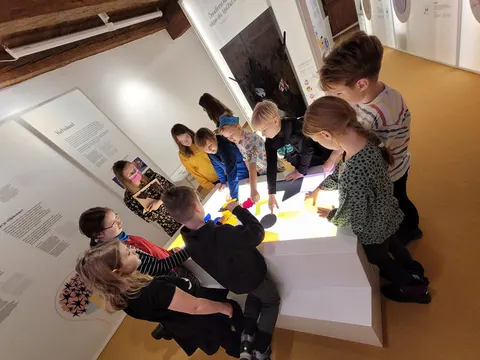
Much of the learning happens outside the school: outdoors, in nature, at museums, in laboratories and at companies. We work with public, non-profit and private sector organisations and with individuals in Estonia and abroad. School and home are partners in supporting the child's development.
7. The educational innovation principle
We use the most effective active learning methods. In planning learning and creating the learning environment, we draw on recent research and on positive experiences of educational innovation from around the world. Loova Tuleviku Kool is itself a creator of educational innovation.