Contents
At Loova Tuleviku Kool, all subjects are taught in an integrated way using the Settlement method (Asustamise meetod). There are no separate subject lessons. Every subject is learned through real-life tasks in general studies lessons.
The Settlement method (in English Settlement, in Icelandic Landnámsaðferðina) was introduced in Iceland in 1976. It was created by Herdís Egilsdóttir, a well-known Icelandic children's author, illustrator and actress who also worked as a teacher for 45 years. Over her teaching career she took 7–8-year-olds through the “Settling” process 12 times, creating 12 new civilisations along the way.
What the method is about
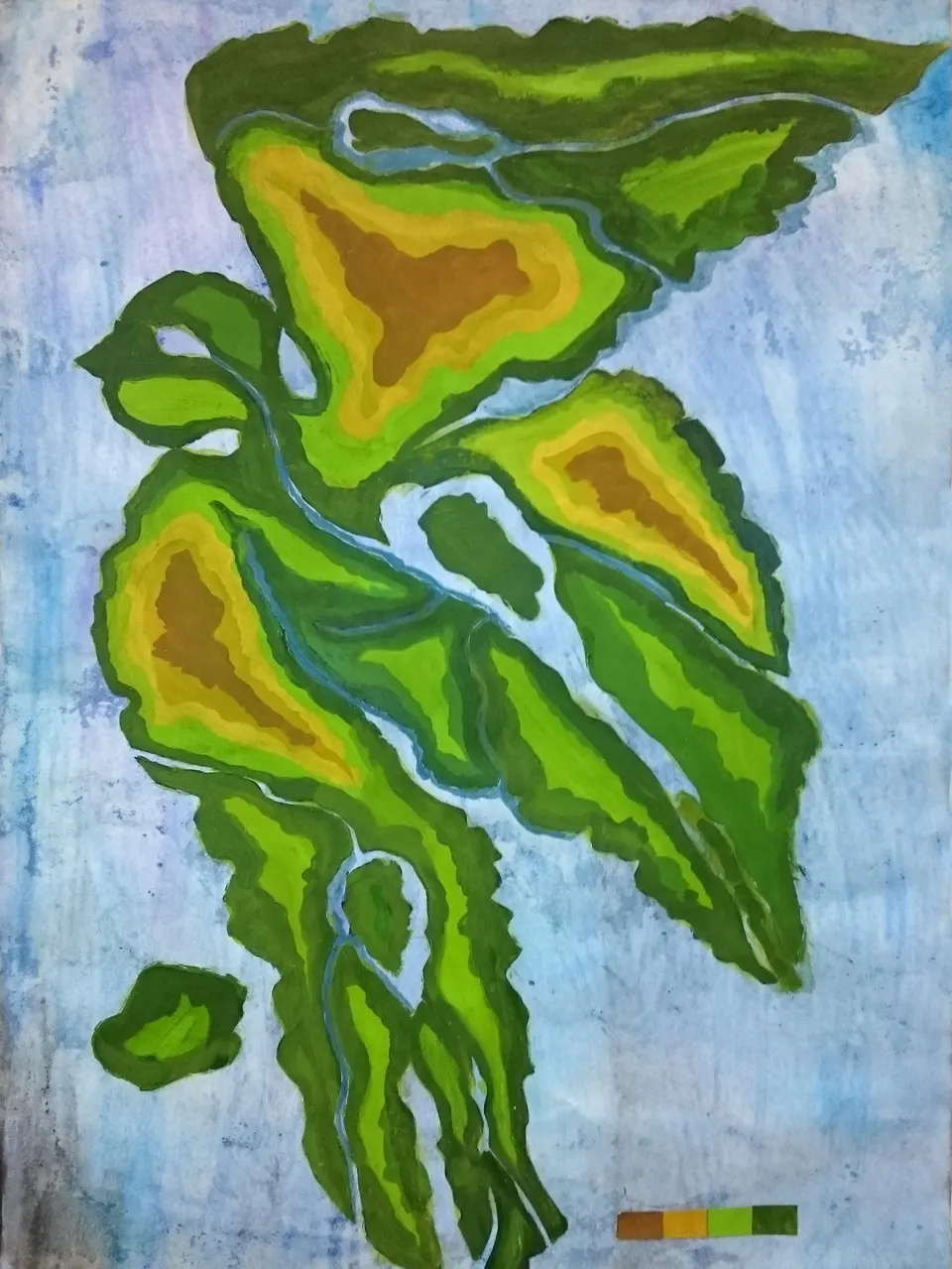
The Settlement method does not teach subjects separately: all subjects are woven together. Settling means the children playfully creating and developing an imaginary civilisation. The starting point is an uninhabited island marked on the globe – a natural environment untouched by people. The pupils set off from Estonia to settle the island and build a civilisation on it as they see fit. On this journey the teacher acts as guide, inspirer and organiser. The method's author organised the school day so that the first half was spent learning reading, writing and maths, and in the second half the children applied what they had learned in the settling process, weaving in all the other subjects and important topics as well.
What do children learn?
The topics covered with the Settlement method form a logical narrative. Topics that arise naturally from the settling process include, for example: location on the globe, wildlife, preparing for settlement, the settlers' voyage to the island, landing, shelter, home, water, food, growing food, fishing, healthcare, education, religion, law-making, finance, communication, government, international relations, taxes, services, advertising, industry, export/import, culture, art, the environment, energy, science and languages. All of these topics can be explored by 7–8-year-olds in an age-appropriate way, and there is no upper age limit.
Why this method?
Each child's individuality is respected
The Settlement method lets children steer their own learning, work according to their abilities and talents, and take on responsibility as they become ready for it. This in turn supports the development of self-direction, creativity and enterprise. Involving the child in the process and giving room to their own initiative keeps them motivated to learn.
Subjects come together naturally
One of the big problems in education is that people cannot apply what they learned at school in real life. Nor can they carry knowledge and skills from one subject over to another. It is precisely through real-life tasks and problem-solving that the Settlement method trains children to actually use what they learn. The method integrates all subjects in a natural way. Since its essence is, in effect, playing at life, the subjects come together just as they do in real life. Herdís Egilsdóttir: “Children start to notice their own lives and the lives of other peoples, and to think about what they can and want to bring to their island.”
More effective than traditional teaching
Compared with traditional teacher-centred methods, active learning methods are far more effective. In learning, effectiveness means that in the same amount of time more is learned, or it is learned more deeply and retained for longer. A good example: a month after hearing a lecture, people remember 5% of it, but after one of the most effective methods – teaching others themselves – they remember 95%. According to Herdís Egilsdóttir, her former pupils, now almost 50 years old, still remember the anthem of the land they created. Active participation, motivation, processing what is learned on several cognitive levels and cooperation make settling an effective active learning method. This makes it possible to reduce homework and set aside part of the learning time for teaching the different aspects of being human.